How to Choose an Art Journal You’ll Love
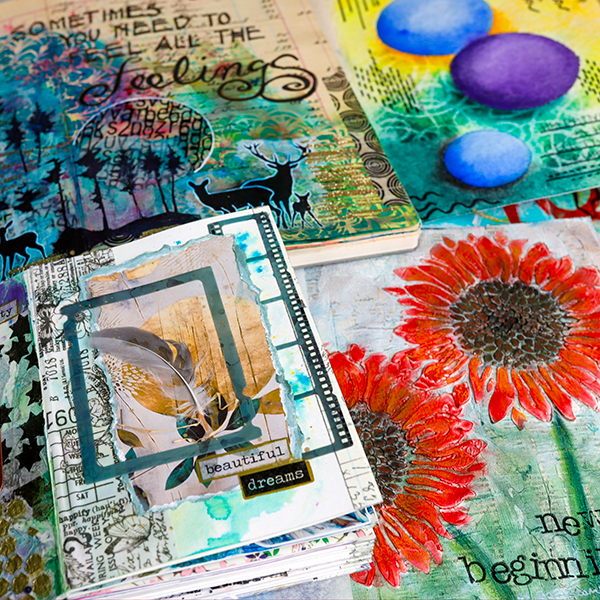
Are you curious about art journaling but don’t know how to choose the best art journal for you? Today we’re diving into what to look for in an art journal, and how to figure out which book will work best for your personal art style. Plus I’ll share my favorite art journals that I use on a regular basis.
Hop-A-Long Studio is reader-supported. When you buy through links on our site, we may earn an affiliate commission at no cost to you. Learn more.
What to Consider When Choosing an Art Journal
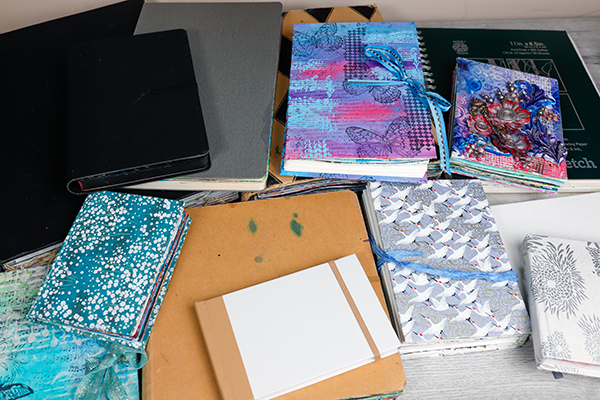
Perhaps you’re new to art journaling or maybe you’ve just finished completing your current art journal. This is an opportunity to explore something new and different to use in your journaling.
Choosing an art journal is a very personal thing, it’s like buying a new pair of shoes. There are decisions to make to ensure you’ll be happy with the journal that you choose and that it will work with the mediums you like the most.
Size Matters
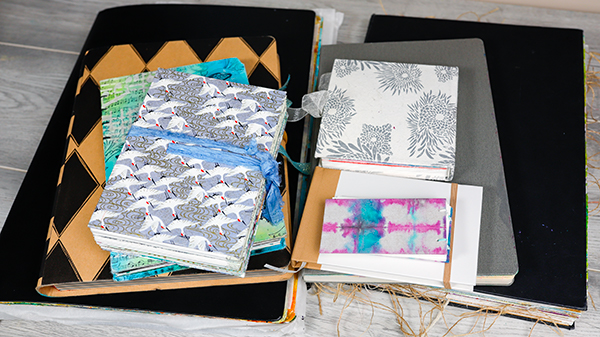
I have art journals from tiny little ones to large ones that I use in my creative projects. If you’re starting out, I would suggest staying away from very large art journals. The larger the journal, the more space there is to work in, but these page take longer to complete. If you’re new to the art journaling process, this can be pretty intimidating.
I like to work a lot in 5”x7”, 8”x10” or 9”x12” journals. There’s also some great 8” x 8” journals available. This way, if you want to have a 2-page spread, you have a larger surface. But if you want to stick to just one page, it’s a small surface and easy to finish in shorter art journaling sessions.
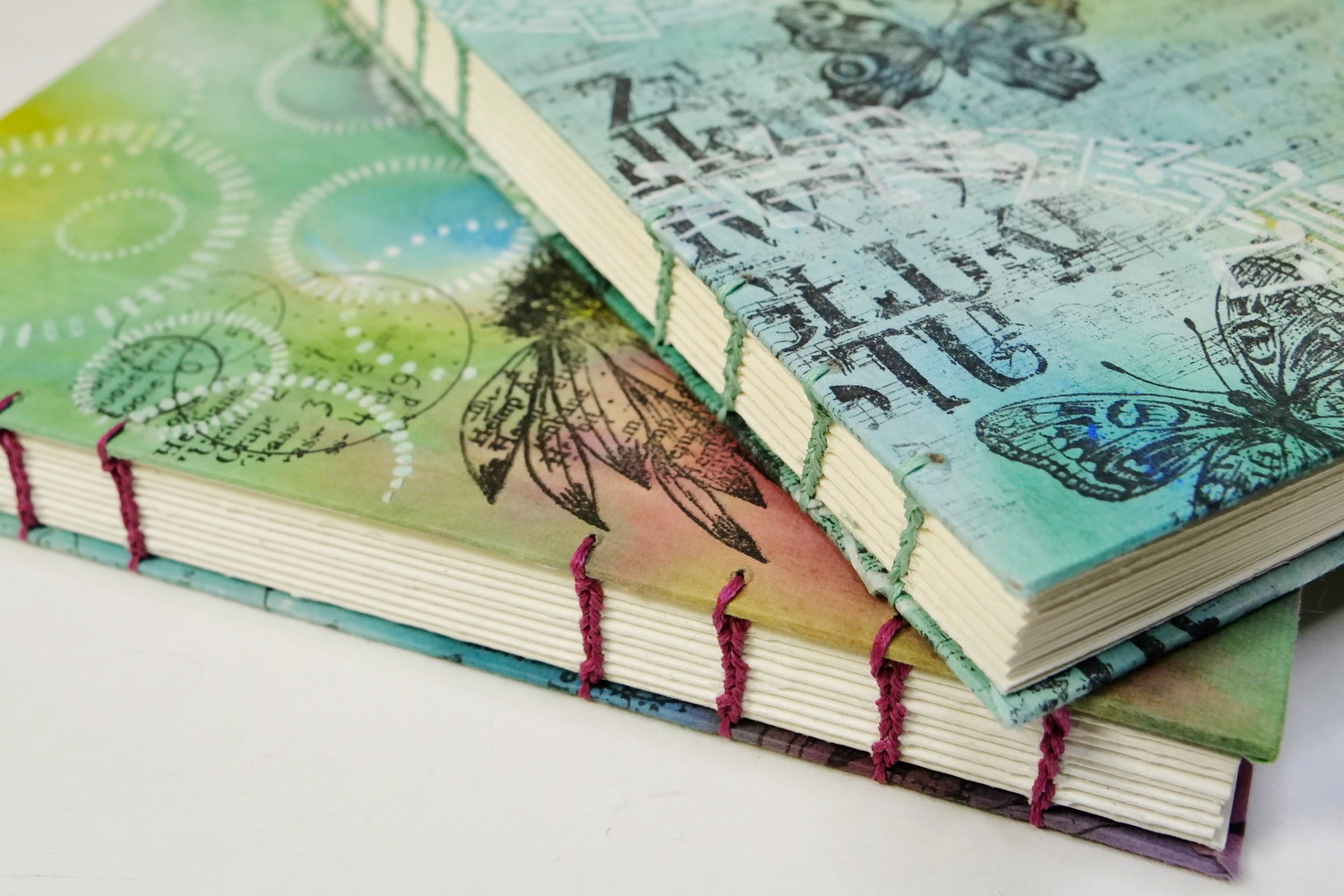
Get one-of-a kind journals lovingly created by artist Nadine Milton founder of Hop-A-Long Studio.

Always at the ready, Moleskine Art Collection Sketchbooks are the perfect portable canvas for those who sketch and draw.

The Dylusions Creative Journal is a blank journal that features matte heavyweight mixed media cardstock. The journal is make from sturdy chipboard and filled with 48 unlined pages. It measures 5.625" x 8.375".
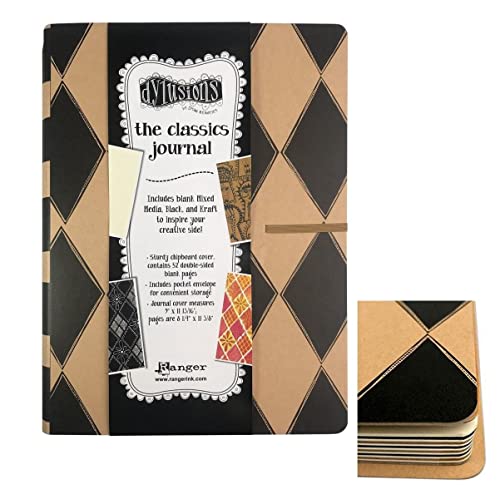
When you need somewhere to create and preserve your artwork, look no further than this Dylusions Classics Journal from Ranger Ink, designed by Dyan Reaveley. This journal includes 52 double-sided pages, 28 mixed media, 12 black and 12 Kraft pages, all waiting for your inspiration.
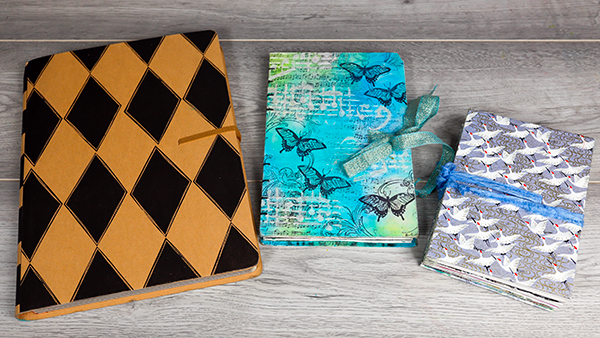
Where Do You Like to Create?
Where do like to create? Do you create at home or do you like meeting with other people to work in your art journal? Do you work outside in nature or inside in a studio? I have small journals that I take with me on vacation or when I meet up with others to create.
Some of my larger journals (10” x 14” and 12” x 17”) are specific for studio work. Keep this in mind when choosing an art journal.
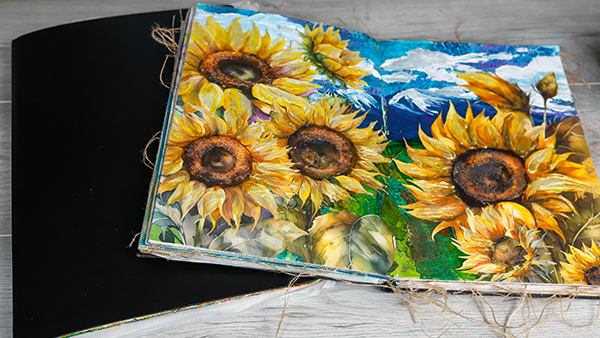
They can get heavy over time so choosing a size that works best for your space can make a difference on how much you enjoy the process.

Always at the ready, Moleskine Art Collection Sketchbooks are the perfect portable canvas for those who sketch and draw.
Do You like Single-Page or Double-Page Spreads?
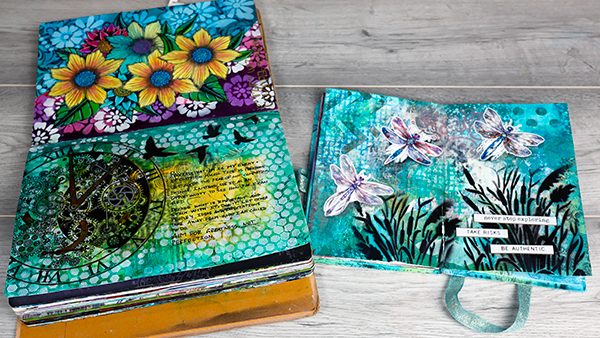
If you like to work with double page spreads, this may help you determine which size of journal you want to use. For me, I often will use a 9”x12” journal and will create a single page at a time. The alternative it to use a 9”x6” journal where this would be a double page spread. This is a personal preference. These are things to consider when choosing your journal.
Coil Spine or Stitched Book?
Do you prefer a stitched journal that lays flat or do you prefer a coil spine journal? I personally prefer a stitched journal, but there’s are pros and cons to both.
Coil Spine
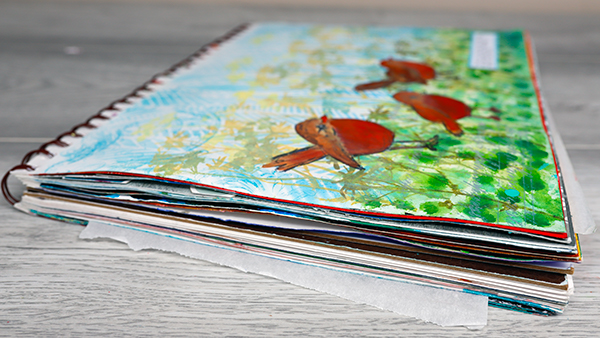
The coil spine journal is nice because you can easily remove sheets from it when your journal becomes too thick. A coil journal expands easily as your pages get thicker. This prevents your book from fanning out. Coil spine journals are usually less expensive than a stitched book.
My frustration with the coil spine is I find the spine gets in the way, especially if you’re writing close to the spine. I also tend to get paint along the spine, and the spots between the coil and hole punch tend to look a bit messy.
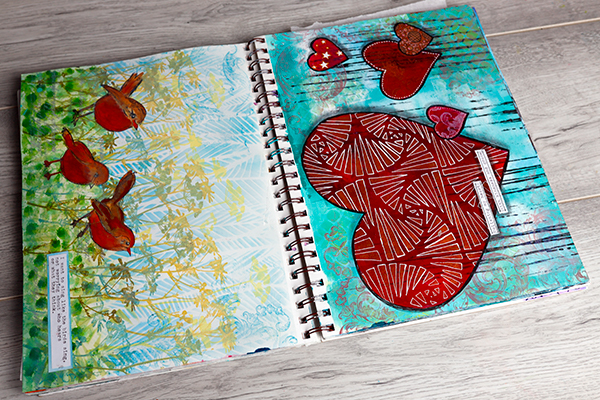
You can prevent this from adding masking tape next to the spine to keep the pages cleaner. Otherwise, it’s easy to get paint around the holes of the spine and have this transfer onto other pages.

- Nature sketch drawing book
- Made in the USA
- Can be used for wet or dry media
- Acid free with 25-percent cotton sheets

Strathmore Bristol Visual Journals are designed to meet the intense demands of the artist's creative process. Each journal contains either smooth or vellum surface 100 lb (260 gsm), acid-free bristol paper, with heavy-duty covers and a spiral wire binding that is thicker and stronger than traditional bindings.
The Stitched Book
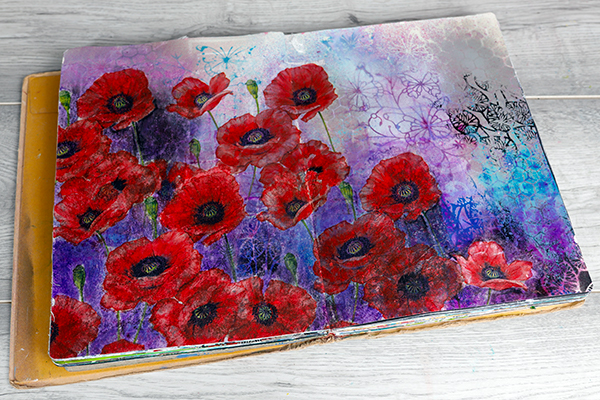
I love stitched books because there’s a continuous surface to work on. If I’m creating a single page layout, it’s easy to add a piece of masking tape at the spine to prevent bleed over onto the next page.
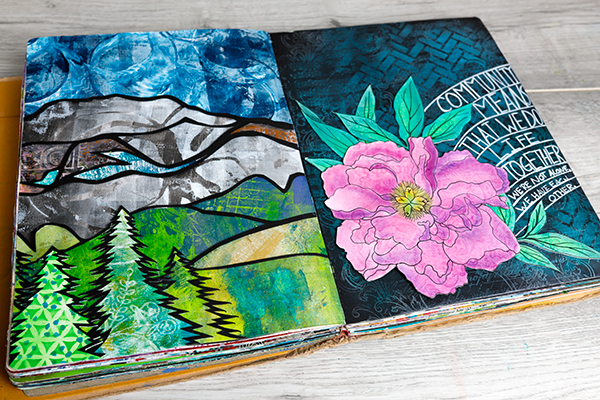
I like how stitched art journals lay flat, and I don’t have anything in the way of my hand as I write or paint along the surface. I like that there is one continuous surface without the spine breaking up the art.
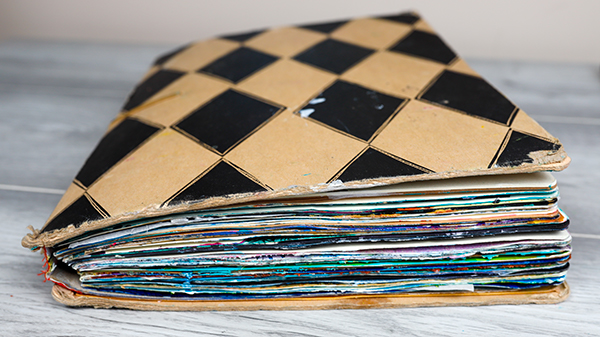
The main negative about stitched spines is depending on the layers you put in your book, these can get thick and can fan out over time. I don’t mind this in my journals, but if that bothers you, the coil spine might be a better choice for you.
When you need somewhere to create and preserve your artwork, look no further than this Dylusions Classics Journal from Ranger Ink, designed by Dyan Reaveley. This journal includes 52 double-sided pages, 28 mixed media, 12 black and 12 Kraft pages, all waiting for your inspiration.
Paper Type
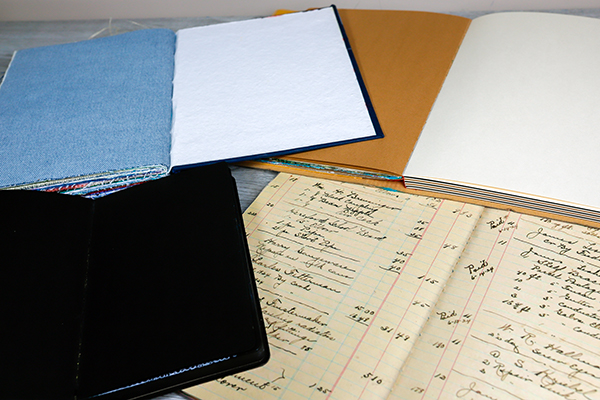
What materials do you like to use when working in your art journal? Is it mostly watercolors, inks and pen? Or do you like working mostly with acrylics and collage?
Depending on the mediums you like to use will affect which art journal surface you’ll like to work with.
Choosing the Journal that Fits You
Over the years I’ve worked on a lot of different surfaces. These include fabric, burlap, canvas, watercolor paper, mixed media paper, and Bristol paper to name a few.
Here’s my top choices based on the mediums that you like to work with.
If You Like Ink Blending, Stamping and Pens
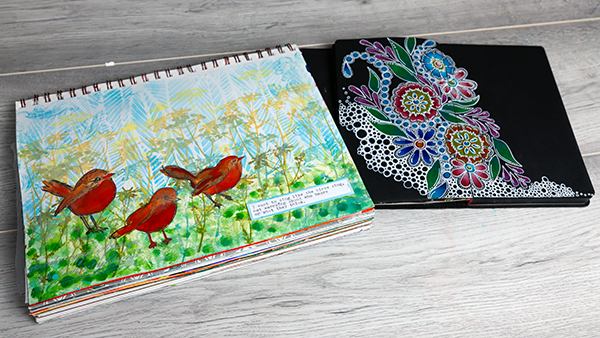
If you like using pigment or dye inks for blending and stamping and love using pens in your journal, I would suggest getting a journal with smooth paper.
My favorite journals in these categories are the Bristol journal and Dylusions Journal.
Bristol journals are excellent for working with dry mediums. The surface is smooth and I use Bristol paper for most of my drawings. If you’re looking to work with inks, pens, colored pencils or markers, this is a great surface. Your pens will not catch, and you will get beautiful blending with inks and colored pencils.
Dylusions journals are a great choice as well. They are designed for mixed media but have a nice heavyweight, smooth paper in them.
When you need somewhere to create and preserve your artwork, look no further than this Dylusions Classics Journal from Ranger Ink, designed by Dyan Reaveley. This journal includes 52 double-sided pages, 28 mixed media, 12 black and 12 Kraft pages, all waiting for your inspiration.
Strathmore Bristol Visual Journals are designed to meet the intense demands of the artist's creative process. Each journal contains either smooth or vellum surface 100 lb (260 gsm), acid-free bristol paper, with heavy-duty covers and a spiral wire binding that is thicker and stronger than traditional bindings.
The Dylusions Creative Journal is a blank journal that features matte heavyweight mixed media cardstock. The journal is make from sturdy chipboard and filled with 48 unlined pages. It measures 5.625" x 8.375".

Expand your art journaling with new shapes and sizes! The Dylusions Creative Journals are now available in an 8” x 8” square and contain 48 unlined pages.
Always at the ready, Moleskine Art Collection Sketchbooks are the perfect portable canvas for those who sketch and draw.
If You Like Working with Watercolor
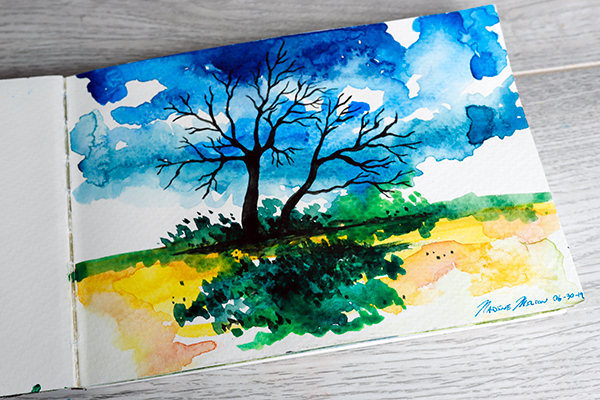
If you are looking for a journal specific for watercolor, I would consider a Strathmore 400 series journal. Or if you have unlimited budget, an Etchr cold press watercolor journal. These journals are made with high quality paper and will take watercolor beautifully. The nature of the cold press paper gives this paper texture, which is excellent for watercolor, but not great for stamps or other mediums.

Flexible and lightweight, this journal holds 48 pages of acid-free, 140 lb (300 gsm) paper. Ideal for use with watercolors, gouache, and acrylics, Strathmore 400 Series watercolor paper has a natural white color and traditional cold press surface that allows for fine and even washes, as well as lifting and scraping techniques.

Filled with artist-grade, 100% cotton paper, Etchr Mixed Media Hardbound Sketchbooks are ideal for drawing, illustrating, and painting with watercolors, graphite, markers, pastels, and more.
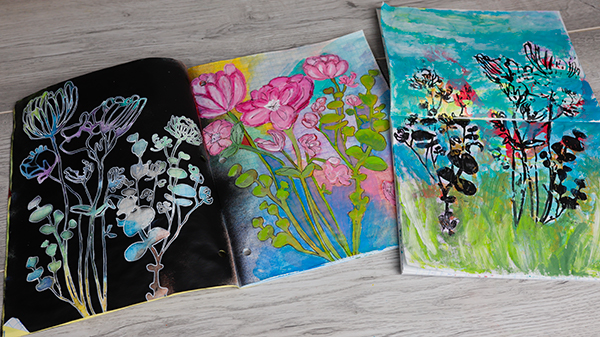
If you want a watercolor journal that you can use watercolors and pens with to create detailed illustrations, consider a hot press watercolor journal by Etchr. Here’s one of the journal pages that I did with hot press paper on this journal. It’s excellent for the bendability of color but also allows for clear and precise pen work.
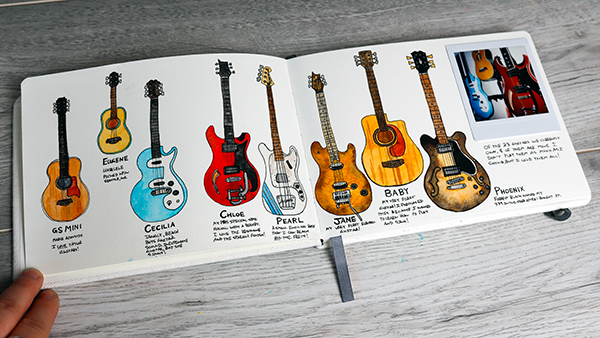
Filled with artist-grade, 100% cotton paper, Etchr Mixed Media Hardbound Sketchbooks are ideal for drawing, illustrating, and painting with watercolors, graphite, markers, pastels, and more.
Just be aware that very wet-on-wet washes work best for cold press watercolor paper.
If You Like Collage
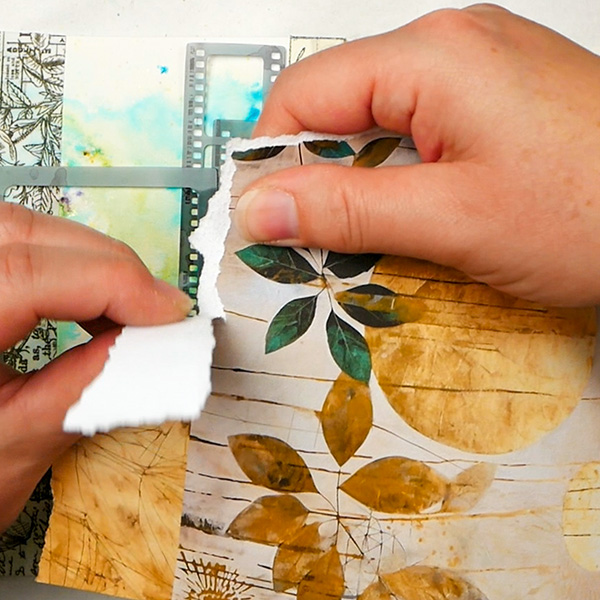
If you are a collage artist and mostly want to collage paper into the journal, a mixed media journal would be an excellent choice. As you add your paper to this journal, it’s going to make the papers stronger, so you can get away with a lighter weight mixed media paper.

- Internally sized for use with wet media with a durable vellum finish for drawing techniques.
- Archival grade and lignin free paper.
- 90 lb / 190 gsm
- 100% Cotton, acid Free
If You Like Working with All the Mediums
If you like working with acrylic paint, watercolor, pens, stamps, collage papers, and like to draw, there’s a few options out there that will work well for you!
Dina Wakley Media Journals
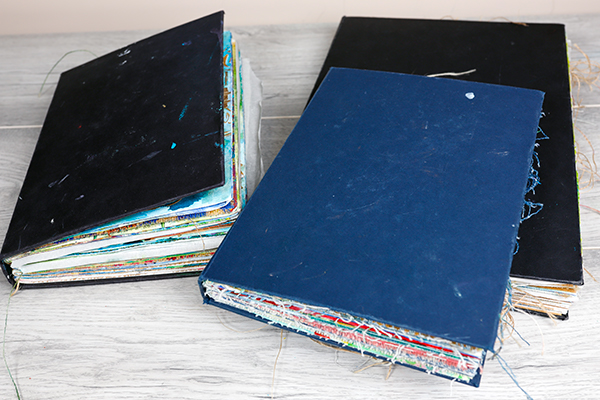
Dina Wakley keeps coming out with new and interesting journals for mixed media. I have some of her old ones that are no longer in production, but she’s always creating something new that works amazingly with mixed media!
The Dina Wakley Media Journal has a combination of burlap, cotton rag, watercolor, and kraft paper. If you want to explore surfaces, this is a great place to start!
If you like to have a surface that will not warp with heavy amounts of wet mediums, try her watercolor journal. My experience with several of her watercolor surfaces is that they’re great for lots of wet mediums, but have a bumpier, cold press style surface.
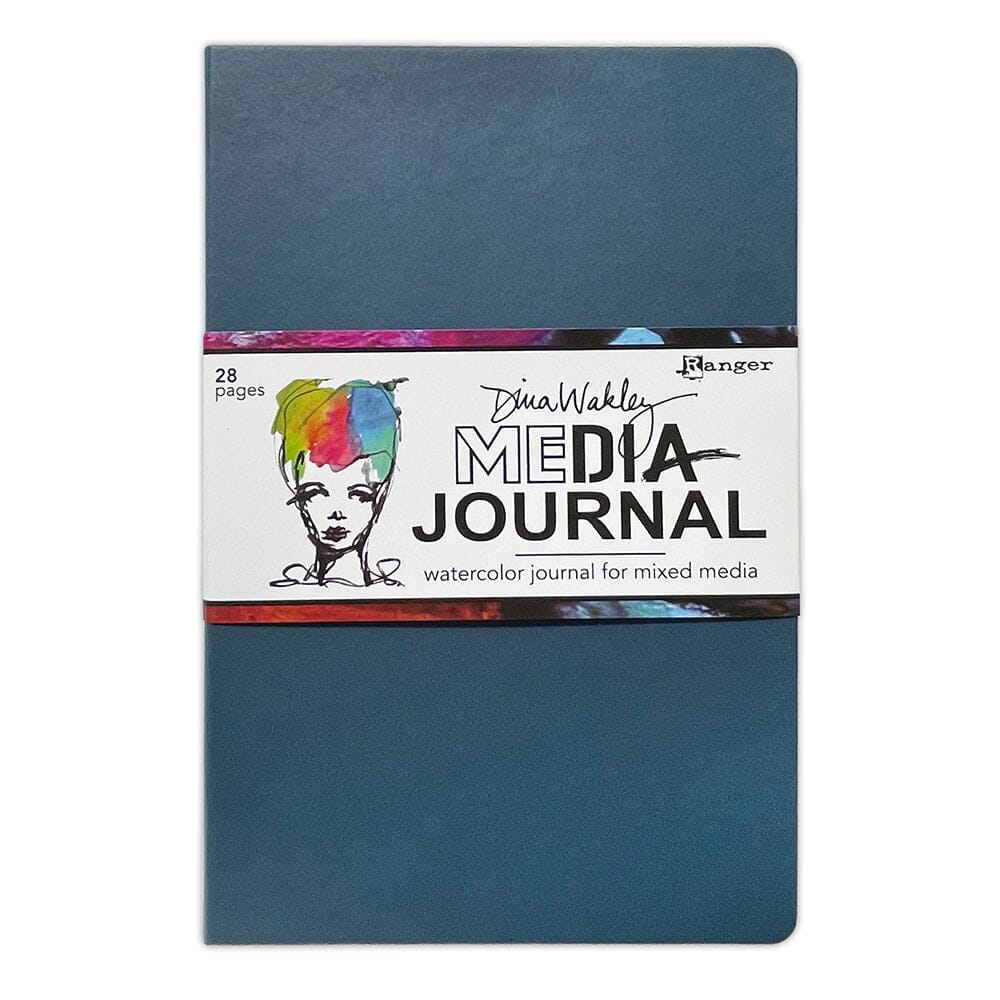
The Dina Wakley Media Watercolor Journal features a gorgeous blue cover and 28 pages of heavyweight watercolor paper. It’s a durable and versatile space to explore your creativity.

Put the mix into mixed media with the Dina Wakley Media Journal. Includes a unique variety of surfaces ideal for mixed media & art journaling. Surfaces include burlap, canvas, cotton rag watercolor paper, and kraft surfaces.
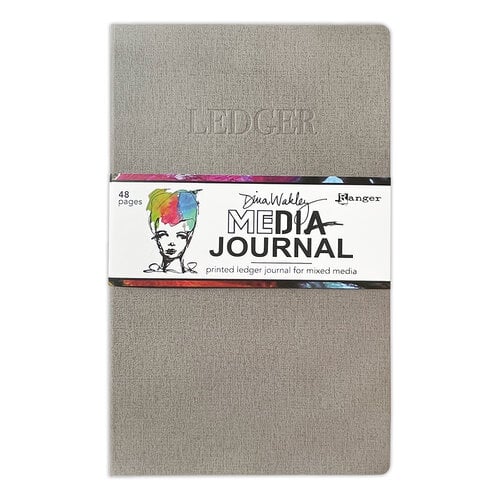
The Dina Wakley Media Ledger Journal is a faithful reproduction of a 1920's hardware store ledger, perfect for mixed media artists.
Dylusions Journals
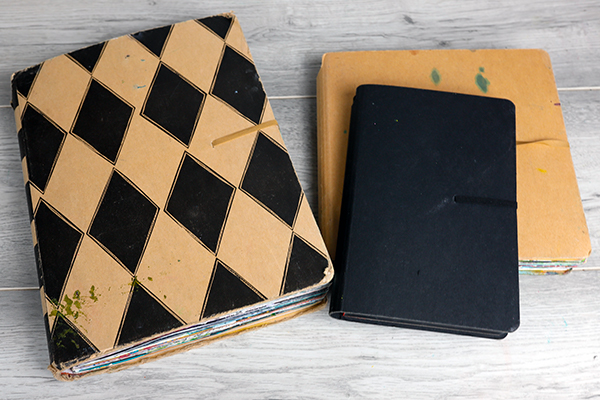
Even though the Dylusions Journals have smooth surfaces, they are excellent for mixed media. They are a bit more lightweight paper, so you might get a bit more buckling over time, especially using wet mediums. But I do use them for a variety of mixed media work.
My favorite Dylusions journal is the classics journal as you get a combination of off-white, black and kraft paper in one book.
Expand your art journaling with new shapes and sizes! The Dylusions Creative Journals are now available in an 8” x 8” square and contain 48 unlined pages.
When you need somewhere to create and preserve your artwork, look no further than this Dylusions Classics Journal from Ranger Ink, designed by Dyan Reaveley. This journal includes 52 double-sided pages, 28 mixed media, 12 black and 12 Kraft pages, all waiting for your inspiration.

Dylusions Creative journal is a blank journal with black paper made with matte heavyweight mixed media cardstock. The cover is made from sturdy chipboard and filled with 48 unline pages. It measures 5.625" x 8.375".

Dylusions square black creative journal- 48 unlined pages are heavyweight black cardstock, ideal for the application of paint, doodling, collaging and other art journaling techniques.
The Dylusions Creative Journal is a blank journal that features matte heavyweight mixed media cardstock. The journal is make from sturdy chipboard and filled with 48 unlined pages. It measures 5.625" x 8.375".
Pentalic Nature Sketch Journal
The Pentalic Nature Sketch journal is still one of my favorites, but not always easy to get a hold of. It has paper that’s great for sketching and drawing but also takes watercolor well. This is one that I like to use for pen and ink work with watercolor and urban sketching.
- Nature sketch drawing book
- Made in the USA
- Can be used for wet or dry media
- Acid free with 25-percent cotton sheets
Looking for Something Unique?
Hop-A-Long Studio Art Journals
If you’re looking for something extra special, check out my selection of art journals from my Shop! Each of these is lovingly handmade and stitched by me and I use these in my own art practice. I have some with watercolor paper, others with mixed media paper. They are both excellent for working with mixed media projects.
As they have stitched bindings, these will expand slightly as you work, giving you less issues with a fanning book over time. If you’re looking for a particular cover, paper and stitch design, let me know! I do create a few custom books every year.
Get one-of-a kind journals lovingly created by artist Nadine Milton founder of Hop-A-Long Studio.
Dina Wakley Ledger Journal
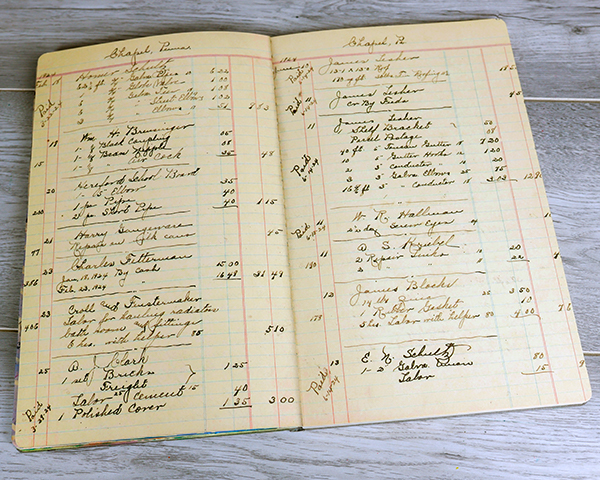
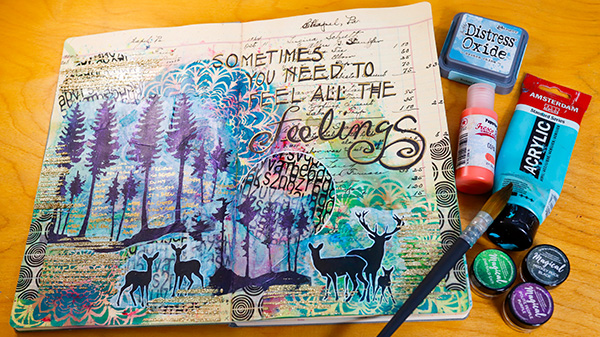
I find this a fun and unique journal that is excellent for mixed media. What makes this journal special is that it is a replica of a vintage ledger, so it printed with random writing on the pages. If you’re looking for something to get you past the intimidation of the blank page, this is a great choice!
The Dina Wakley Media Ledger Journal is a faithful reproduction of a 1920's hardware store ledger, perfect for mixed media artists.
If you’d like to see the full review of this journal where I test multiple mediums in this book, you can visit the article: My First Impressions of the Dina Wakley Ledger Journal.
On a Tight Budget?
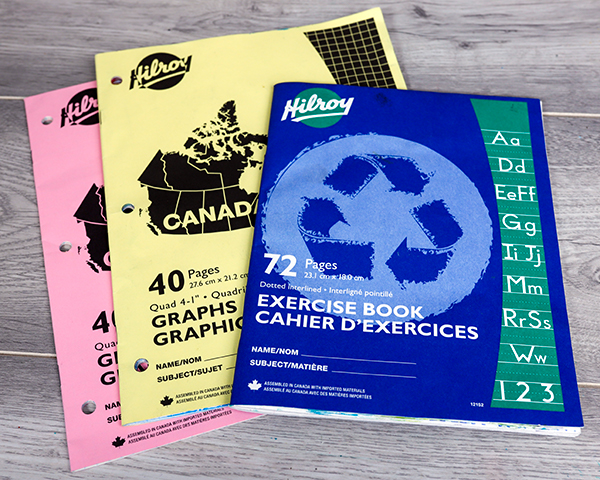
If you’re on a really tight budget, and the idea of spending a lot of money on a journal isn’t possible, you can work on anything! You can purchase a super cheap composition notebook to get started. It’s going to get crinkly and anything wet may also seep through the pages, but if you’re on a budget, it’s a great way to get started!
You can also repurpose an old book, gluing some of the pages together and adding gesso to the papers for strength. Again, you’ll get buckling and your mediums will work differently on this type of surface, but it will work as an art journal.
It’s more important to create than being stuck on using the “perfect” journal.
But starting with a stronger surface can help you get better results and prevents you from fighting your materials. But the most important thing is to create, on whatever surface you can afford!

A composition notebook can be a great surface for art journaling, especially if you're on a tight budget!
Any Questions?
I know that I’ve covered a lot of things quite quickly in this article. If you have any questions about these journals and your specific usage case, sent me a message via the contact form! I’d love to chat with you and help you figure out the best journal for you!
Make sure to sign up for Hop-Off-The-Page for more tips and tricks for getting the best results in your art journal process!

2 Comments
Susan Hendren
This was really, really useful information! Thank you so much! I’m going to try out a variety of journals I’ve never heard of before. I especially want one or two copies of Nadine Milton’s homemade journals to watercolor and do collage work in. Thanks so much for taking the time to collect all this information in one place. I’d also like to look into Blick and Dina Wakely journals, among others. Mostly I didn’t know cold press was the best watercolor paper. I’d never heard of Etchers. Thanks again for all of it.
Nadine Milton
You’re welcome, I’m so glad that you found this information helpful! There’s so many journals out there and it can be hard to know what makes them special. I love all the journals, so it’s hard for me to stick with just one brand!